You Can't Get More Out of an AI Than You Put In
Learn why AI tools can't replace human judgment. Discover how to manage AI risks, maintain quality control, and keep experts in the loop for better results.

You Can't Get More Out of an AI Than You Put In
An AI tool earns your trust the same way a new hire does: it gets things right for a while, so you stop checking. The drafts come back clean, the numbers look right, the code runs. Then one day a contract clause says the opposite of what you meant, or a financial model carries a bad assumption buried six rows down, and nobody catches it until it costs real money — because the part that went wrong was never the part anyone was still looking at.
The lesson most people draw from this is "be careful, AI makes mistakes." True, and beside the point. The real point is something most people building with these tools have backwards, and getting it right decides where AI belongs in your company and who you keep on payroll because of it.
The output is capped by what you feed in — including the human
You can't get more intelligence out of a system than you put into it.
A tool can be fast. It can be polished. It can take what you give it and unfold it into something that looks far bigger than what went in. But it can't add judgment that wasn't there to begin with. Whatever genuine smarts come out the far end were either in the model or in the person steering it. The system doesn't manufacture the difference out of thin air.
This sounds almost too simple, so let me defend it against the obvious objection. You can write a single short formula that draws a shape of endless, infinite detail — zoom in forever and there's always more. So isn't that complexity from almost nothing? It is, but notice what kind. The formula doesn't add anything as it runs. Every point was already decided the moment you wrote the rule. It elaborates; it doesn't exceed. You get infinite detail and exactly zero new judgment — nothing the rule didn't already contain comes out of running it.
That's the distinction that matters for your business. An AI can take your inputs and spin them into something elaborate, fluent, impressive to look at. What it can't do is exceed them where it counts — it can't be right about something its inputs didn't already determine. And being right about the thing nobody specified in advance is exactly what you're paying an expert for.
So if you want a system that performs above what the AI can do on its own, the extra has to come from somewhere, and there's only one place it can come from: a person in the loop who is operating at a higher level than the machine. Not watching it. Feeding it. The human isn't a safety net under the system. The human is the part of the system that raises its ceiling.

"Smarter" buys speed and hidden errors, not a higher ceiling
Here's where it gets dangerous, because the AI tools really are improving and it really does look like the ceiling is rising on its own.
But unpack what "smarter" actually means quarter to quarter. It means two things: faster, and fewer mistakes you can see. That's it. And the second one is worth far less than it sounds.
Think about what happens as a tool climbs past your own level in some area. Its remaining errors don't get smaller — they get harder for you to see. A mistake made by something operating above your head doesn't look like a mistake. It looks like an answer. So "fewer visible errors" can mean the tool genuinely got more reliable, or it can mean the errors went somewhere you can no longer look. From where you sit, those two are identical. You can't tell them apart by reading the output, which is the only thing you've got.
That's why polishing the tool doesn't lift the real ceiling. It lifts the apparent one. The output looks more trustworthy whether or not it became more trustworthy, and the gap between those two is exactly where the expensive surprises live.
Trusting the output is fitting a curve with a variable missing
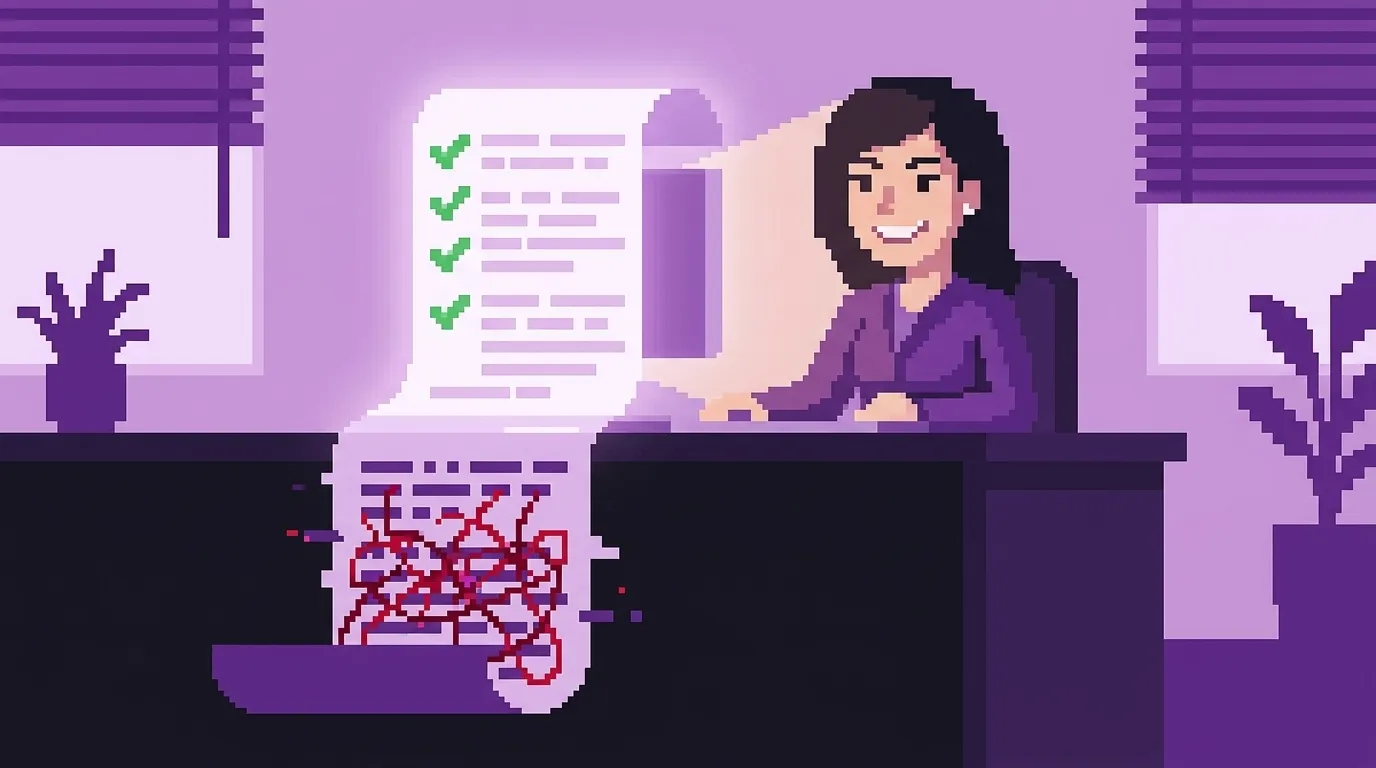
Picture trying to work out a formula when you can only see some of the numbers it produces. You plot the points you can see, they fall in a nice clean line, so you confidently draw the line straight through — and you're badly wrong everywhere the piece you couldn't see was doing the work. The visible points didn't warn you. They looked perfectly well-behaved right up to the moment the answer fell apart.
That's what judging an AI by its output is. The part you can see looks clean and consistent, so you trust the whole curve. But if a human's judgment was the missing variable and you took the human out, you're not running a slightly worse version of the system. You're solving the wrong equation and getting a clean, confident, useless answer back.
There's a hard limit underneath this, and it's not new. Almost a century ago a logician named Kurt Gödel proved that a system powerful enough to be useful cannot fully check itself from the inside — it can't completely vouch for its own work. You already know this one from daily life: you proofread your own writing, it looks fine, and someone else catches the typo in the first line instantly. The mind that made the mistake is the worst one to catch it, because it has the same blind spot both times. A fresh set of eyes finds in a second what you read past five times. An AI checking its own work is that same trap — a system trying to certify itself — and no amount of cleverness closes it. The only thing that catches what a system misses is something outside the system, at least as capable as the thing it's checking.
Two questions decide where to let it run
None of this is an argument against AI. I lean on these tools every day. It's an argument for putting your attention on the right thing — not "how smart is the tool," but "what am I actually putting into it, and can I see what's coming out." Two questions sort almost every decision:
Can you check the answer against something outside the machine? A test you can run, a number you can reconcile, a known-good to compare against. If yes, the tool's imperfections barely matter — reality grades the homework, and reality doesn't share the machine's blind spots. Let it run hard. Drafting, summarizing, first passes, anything verifiable. Take the speed.
What does a miss cost? If the answer is wrong and slips through, are you fixing a typo or unwinding a contract? Where a miss is expensive and you can't cheaply check it — judgment calls, strategy, money decisions with assumptions buried in them, anything customer-facing where "looks right" and "is right" can come apart — a smarter tool doesn't fill the gap. It only hides it better. That's exactly where you need a capable human as the missing variable, and the better the tool gets, the more that holds, not less.
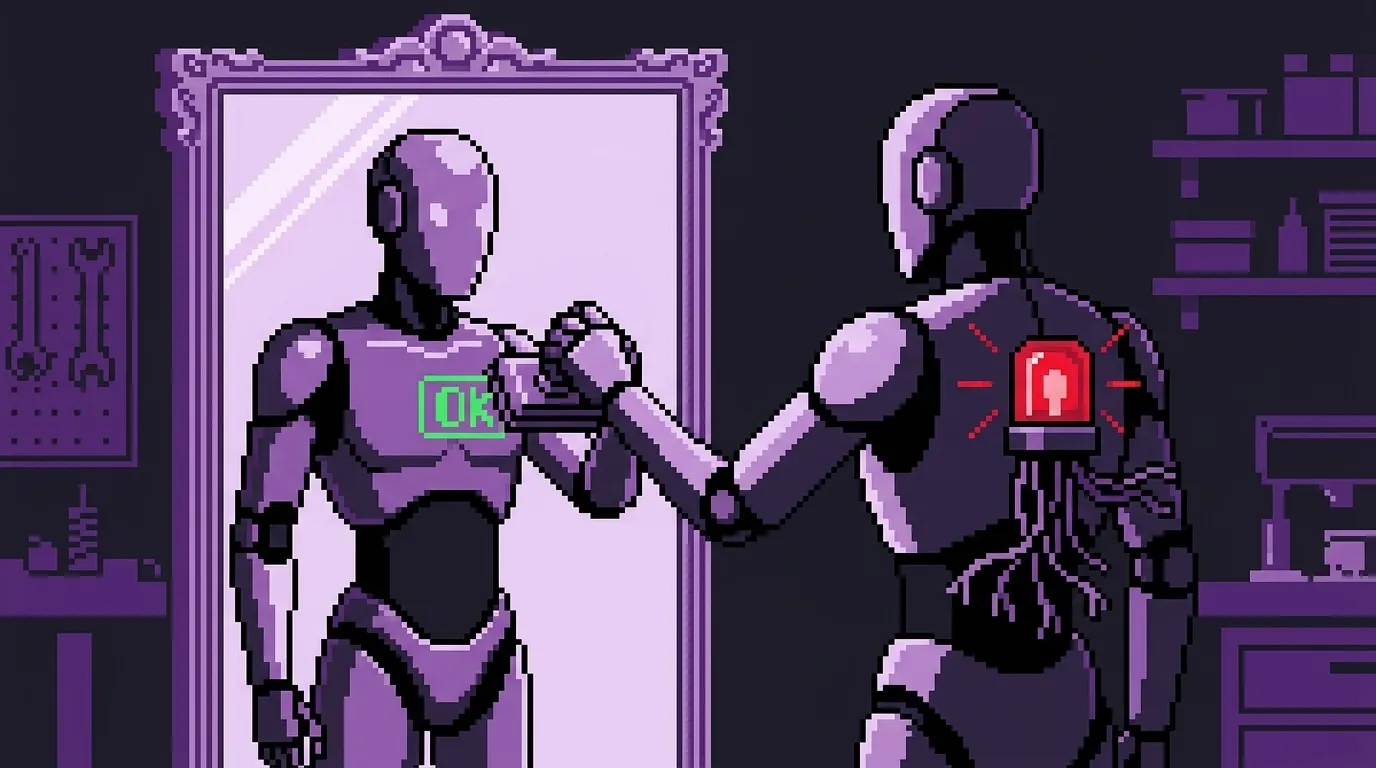
And whatever you do, don't let the AI be the only thing checking the AI. Asking the same tool "are you sure?" gets you the same mind with the same blind spot. The checker has to be different — a person, a test, or hard reality. For a person to be that checker, they have to be able to see what the tool did and why, not just receive its answer. If you can't see inside it, you can't supervise it. You can only hope.
That last part is worth building for deliberately. A tool you can see into — where a person can step in at any point, follow what it changed and the thinking behind it, take the controls, and hand them back cleanly — is a tool that lets a capable human raise its ceiling. A black box that only emits answers does not, no matter how good the answers look. The whole game is keeping the human's intelligence in the loop and able to act, because that intelligence is the only thing that lifts the system above what the machine can do alone.

Better tools raise the value of your experts, not lower it
So here's the part to sit with. The popular story is that better AI lets you do more with fewer skilled people. In the cheap, checkable corners of your business, sure, to a point. But everywhere the work actually decides whether you win or lose, a better tool raises the value of a person who can supply the judgment the machine can't — because the machine, by a rule as old as it is unavoidable, can only give back the intelligence that went in.
The skill you're hiring for is shifting, and it's worth being clear about. It's less about raw brilliance and more about knowing which questions even have a checkable answer and which ride on something you can't test, insisting on work you can verify when verification is possible, and catching the moment something that reads perfectly is quietly off. That's a senior person's instinct, and it's the one thing a tool can't hand you — because a tool can't fully check itself, and it can't add what you didn't put in.
The companies that get hurt won't be the ones that refused to use AI. They'll be the ones that mistook a polished output for a smarter system, trusted a box they couldn't see into, and let go of the person who was the difference between an answer that looked right and one that was. Then didn't find out for three months.
Use the tools, hard, where the work is cheap to check. But build and buy AI you can see inside, keep a capable human in the loop where the judgment lives, and stop measuring the tool by how smart it looks. You can't get more out than you put in. The only question that matters is whether you're still putting enough in — and whether you can still see what's coming out.
Keywords
Related Articles
Source Control Is Not Mind Control
Escape the AI entropy pit. Learn the four disciplines of vibe coding—from source control to data mod...
Hey SMB: Your Superpower Is Calling
Your SMB's size is a structural advantage for AI. Learn how to consolidate your business data into o...
How a 40-Person Company Runs Like a 100-Person Company
Stop letting value leak out of your business. Learn how to build systems that amplify your team's ta...