
Your Accounting Method Should Drive Your Software — Not the Other Way Around
Don't let your accounting software dictate your business. Learn how to choose the right accounting method (cash vs. accrual, costing methods) to drive profitability and clarity.

Most 20–150 person businesses make the same expensive mistake: they pick software first, then try to jam their accounting into it.

It feels faster. The demo looks clean. The sales rep says "best practices." And for a few months, everything seems fine.
Then you hit the part nobody puts in the marketing screenshots:
- The P&L says you're profitable, but cash is tight.
- Projects look "busy," but margins keep shrinking.
- Pricing turns into vibes because costs aren't trustworthy.
- Someone builds a spreadsheet "just for now," and now the spreadsheet is running the company.
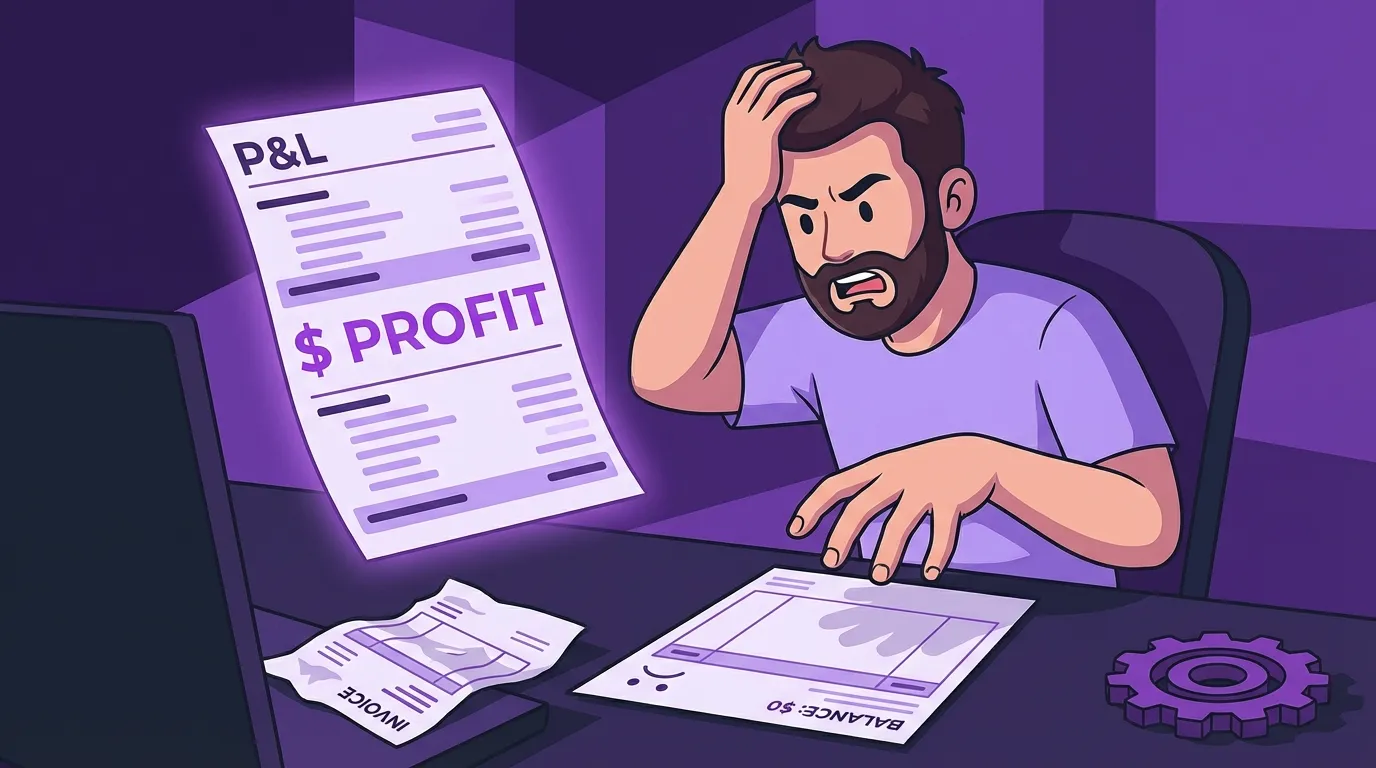
That's not a discipline problem. It's an accounting-method mismatch that your software quietly amplifies.
When ERP software works, it's a consolidation engine — it takes information that currently lives in different places and puts it into one place. Everything downstream — dashboards, reporting, automation — depends on that foundation being accurate. So before you evaluate another system, you need to make one decision first: what accounting truth are you trying to run the business on?
Cash vs accrual: two different truths
At the foundation, every business is running one of two scorecards.
| Cash Basis | Accrual Basis | |
|---|---|---|
| The question it answers | "Can we pay our bills?" | "Did we actually earn money this period?" |
| Revenue recognized | When cash arrives | When it's earned |
| Expenses recognized | When cash leaves | When they're incurred |
| Works well for | Small, simple operations with fast payment cycles | Any business with AR/AP, inventory, or multi-month work |
| Breaks down when | Timing gaps between work and payment create "mood swing" financials | You don't have the system discipline to track receivables and deferrals |
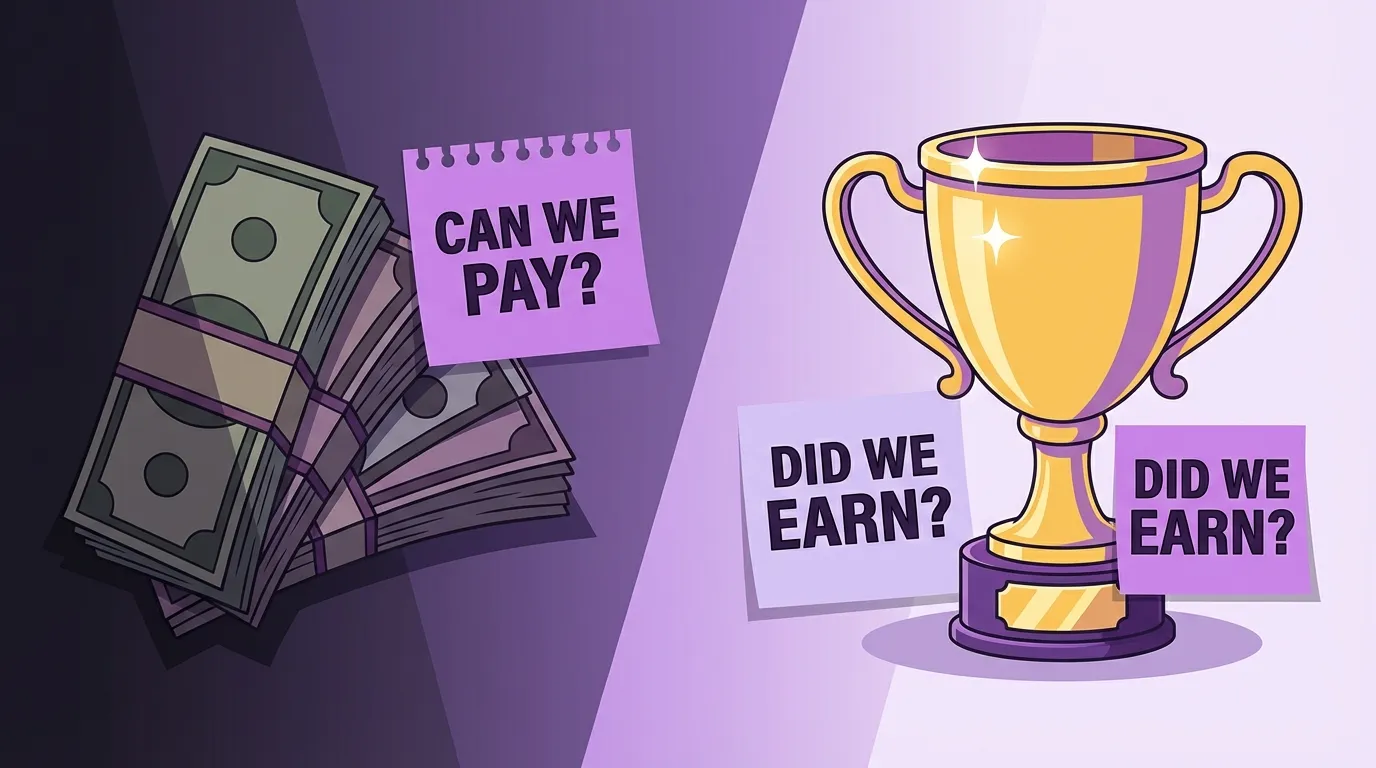
If you want a clean mental model: cash answers "are we alive?" and accrual answers "are we winning?" You need both questions answered. But if your software only handles cash well, you'll never get a trustworthy answer to the second one.
The signal that you've outgrown pure cash-basis thinking? You keep arguing about whether it was a "good month." That argument is the smoke. Timing mismatch is the fire.
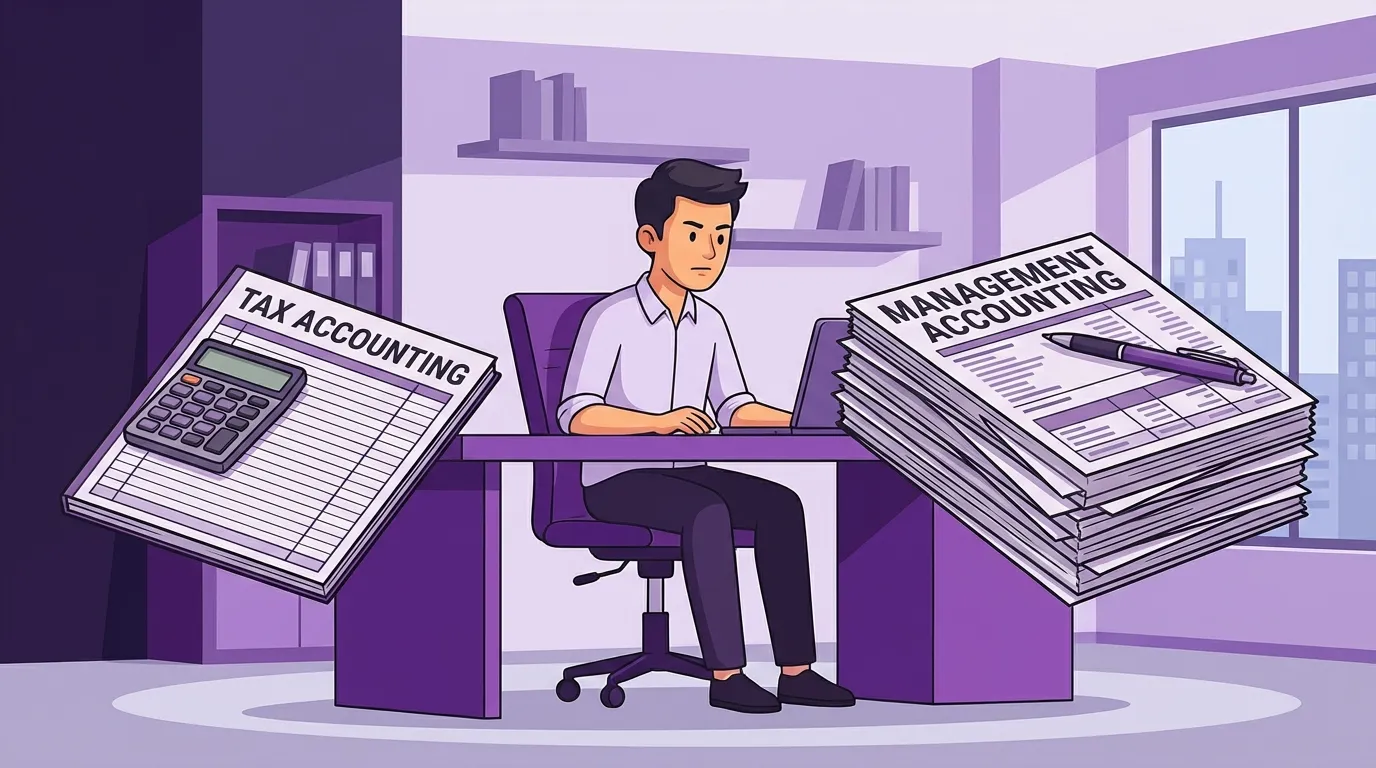
And here's the nuance that trips people up: tax accounting and management accounting don't have to be the same. Many smaller businesses can use the cash method for tax purposes depending on entity type and gross receipts thresholds. But you can keep tax compliance simple while still running the business on accrual numbers that tell the truth. Don't let your tax method limit your visibility.
Costing methods: the difference between knowing expenses and knowing costs
A clean general ledger still won't tell you the thing you really want to know: which work makes money, and which work just creates motion?
"Expenses" answer what you spent. "Costs" answer what it took to produce this — a job, a project, a client engagement, a product line. That "this" is your unit of profitability, and costing methods are how you connect dollars to it.
This is where the software question gets sharp, because most generic platforms support basic accrual accounting but treat costing as an afterthought.
| Method | Best For | What Your System Must Do |
|---|---|---|
| Job Order Costing | Custom manufacturing, construction, specialty installs, complex services | Track materials, labor, and overhead at the individual job level — with job IDs everywhere |
| Project Accounting | Multi-month contracts, milestone billing, percentage-of-completion | Handle deferred revenue, WIP calculations, change orders, and project-level P&L natively |
| Time-Based Costing | Consulting, agencies, professional services | Capture time tied to projects + clients + billing, with rates and burden handled consistently |
| Process Costing | High-volume, homogeneous production | Aggregate costs by department or stage and divide by output — no job-cost bureaucracy needed |
Job order costing is powerful because it turns pricing from guessing into math: what did the job consume, what margin did it produce, and which kinds of jobs make money consistently? But it requires discipline and system support. If the software can't track at the job level natively, you end up maintaining spreadsheets alongside the system, which defeats the purpose.
Project accounting is job costing built for longer timelines. If you run a service business with projects that span weeks or months, this is where "cash vs accrual" stops being theory and starts being operational survival. Your system needs to handle deferred revenue and work-in-progress natively, not through manual journal entries at month-end.
Time-based costing is underrated. For many service firms under 150 people, time-based costing plus a realistic overhead rate gets you most of the value of more complex approaches without the administrative tax. But it only works if time, billing, and cost data live in one place. If your team logs hours in one tool, bills in another, and tracks costs in a spreadsheet, you don't have a costing system. You have a storytelling system.
Process costing is for continuous production where "this specific job" doesn't matter. If your output is basically identical unit after unit, don't build a job-cost bureaucracy to pretend it isn't.
Overhead allocation: the part everyone avoids
Direct labor and direct materials are the easy part. Overhead is where margins go to die quietly.
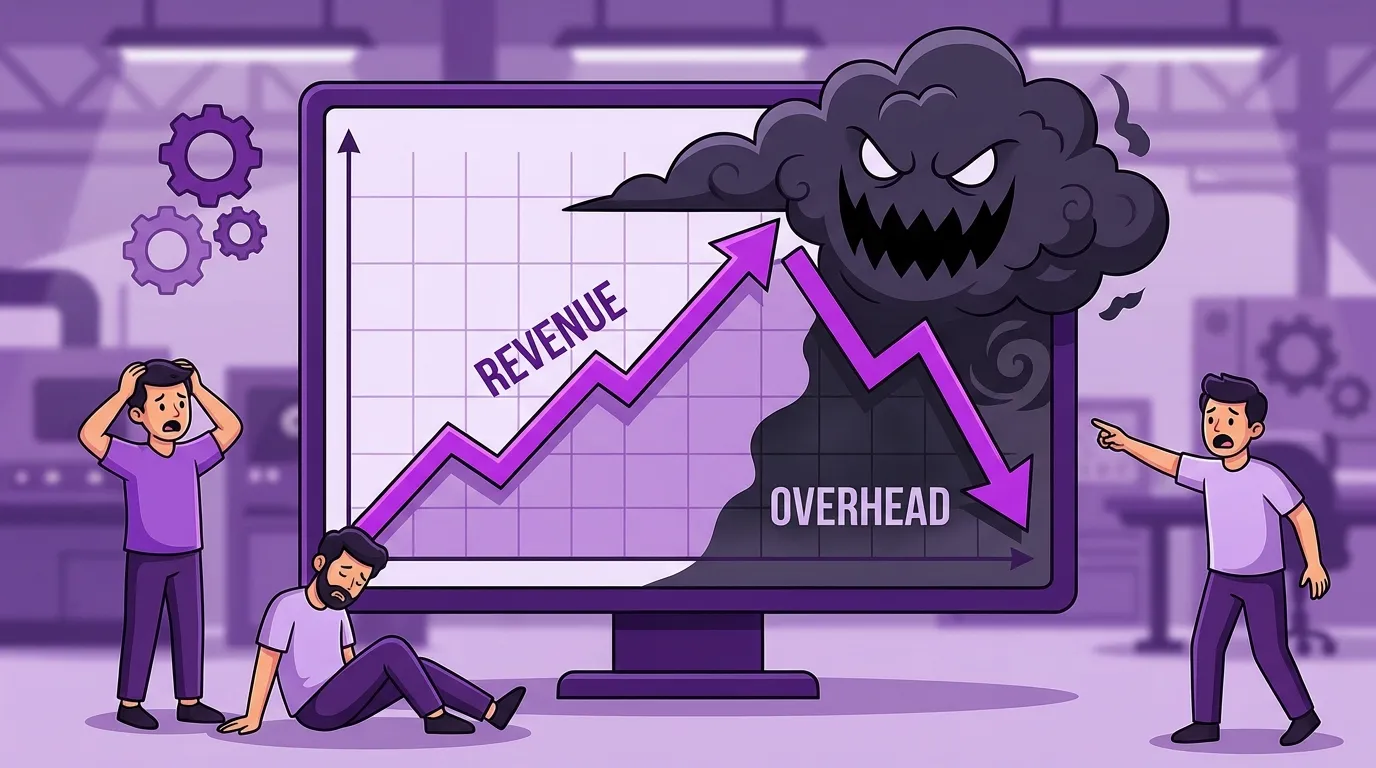
Your overhead method doesn't need to be fancy. It needs to be defensible and consistent. Here's the spectrum, in the order SMBs should consider them:
- Simple allocation — one rate based on labor hours, machine hours, or revenue. Understandable. Often good enough if overhead isn't the dominant cost driver.
- Activity-based costing (ABC) — overhead assigned based on the activities that actually cause costs. Useful when overhead is high and product/service mix is complex. ABC is the method that tells you the uncomfortable truth: your "best customer" might be your worst customer once you price in the chaos of rework, revisions, and hand-holding. But if you can't track activities well, you'll build a beautiful model fed by junk inputs.
- Standard costing — pre-determined expectations plus variance analysis. Powerful in repeatable operations where variances drive behavior; useless if standards go stale or nobody acts on them.
Here's the SMB reality: a "good enough" method that gets maintained beats a sophisticated method that becomes a museum piece. And the method you'll maintain is the one your software makes easy to run, not the one that requires a monthly spreadsheet marathon to produce.
Absorption vs variable: reporting truth vs decision truth
This is where smart businesses quietly make dumb decisions.
| Absorption Costing | Variable Costing | |
|---|---|---|
| What it includes | All manufacturing costs (fixed + variable) loaded onto each unit | Only variable costs on each unit; fixed overhead is a period expense |
| Required for | External reporting (GAAP), lenders, audits | Internal decision-making, pricing, product mix |
| Strength | Shows total product cost, matches costs to revenue | Makes contribution margin obvious |
| Danger | Can reward overproduction to "spread" fixed costs | May understate total cost if used for external reporting |

Use absorption numbers for your lender, your auditor, and your tax return. Use variable costing and contribution thinking when you're making operational decisions. If you use absorption costs for incremental decisions — pricing a one-off order, choosing whether to run overtime, deciding whether to accept volume — you'll often overprice work or reject profitable opportunities because fixed costs are muddying the signal.
The best setups support both views from the same underlying data. Most off-the-shelf systems don't. That's not a small gap — that's the gap between running your business on facts and running it on feelings.
The real cost of generic software is the "human integration layer"
When systems don't match how you work, people fill the gaps.

Someone copies customer details from CRM into a spreadsheet. Someone reconciles invoices by hand. Someone runs the "real" margin report manually at month-end because the system's version doesn't account for overhead properly.
You end up with a business that technically has software but still runs on human glue. That glue is expensive, error-prone, and impossible to scale. And accountability disappears because nobody knows which version of the truth they're looking at.
The implementation sequence that actually works
If you're under 150 people, you don't need an accounting transformation. You need a sequence:
- Keep a clean cash view — you still have to stay alive.
- Add accrual basics — AR/AP, deferred revenue, prepaid expenses — so month-end profit actually means something.
- Choose one costing spine — distinct work gets job/project/time-based costing; homogeneous production gets process costing.
- Add one overhead method you'll actually maintain.
- Only then consider ABC, standard costing, or throughput accounting — and only if the pain justifies the complexity.
The point isn't sophistication. It's decision clarity. And the system you choose should make each step in that sequence natural, not something you have to engineer around.
10 questions to answer before you sign anything
If you only steal one section from this article, steal this. Answer these before you commit to any system:
- What's our unit of profitability? (Job, project, client, product line, process)
- Do we earn revenue on delivery, milestones, or over time?
- Do we need deferred revenue and WIP to be real — not "month-end journal entry theater"?
- Do we need job-level or project-level margin visibility? How often?
- Is time a first-class object in our business model?
- What overhead costs actually move with activity — and what doesn't?
- Do we need contribution margin for decisions (variable view) even if we report absorption?
- Where do spreadsheets currently exist as "shadow systems," and why?
- Which process breaks first when volume grows 30%?
- If our best ops person quit, could someone else run the system without tribal knowledge?

If your answers point to project, job, or time complexity and the system you're evaluating can't model it cleanly, that's not a feature request. That's the gap where margins go to die.
The goal isn't perfect accounting. It's trustworthy numbers.
For a 20–150 person business, the win isn't compliance. It's clarity:
- Pricing you can defend
- Client and project decisions you can make quickly
- A close process that doesn't require heroics
- A system that reflects how you actually operate

Pick the method that matches how you create value. Then demand software that supports it.
Because the business isn't here to serve the software.
The software is here to serve the business.
Keywords
Related Articles
Build or Buy Your ERP? You're Asking the Wrong Question
Stop debating build vs. buy for your ERP. Discover how to identify the operational edge you need and...
ERP for Small Businesses: What Actually Matters
Confused about ERP? This guide cuts through the jargon to reveal what ERP software *actually* does f...
One System, One Truth: How a Right-Sized CRM Replaces Spreadsheet Chaos
Ditch spreadsheet chaos! Discover how a right-sized CRM can streamline your 20-80 person company, bo...