
The Software Company for Businesses in the Middle
Outgrown off-the-shelf software? Discover how PurpleOwl creates custom solutions for mid-sized businesses with unique workflows. See real-world examples!
The Software Company for Businesses in the Middle
Most of the companies that find us have already tried the usual paths.
They’ve lived in spreadsheets longer than they care to admit. They’ve tried to bend an off-the-shelf product into the shape of their business. Or they’ve flirted with enterprise software and discovered the fine print:
Enterprise features come with enterprise overhead.
PurpleOwl exists for the companies in the middle: roughly 15–150 employees, often with highly specific workflows, too complex for “one size fits all,” too small to hire their own product team.
The best way to explain what we do is through the people who dragged us into their problems and refused to accept “just live with it” as an answer.
When “Zillow for Seniors” Didn’t Fit Any Box
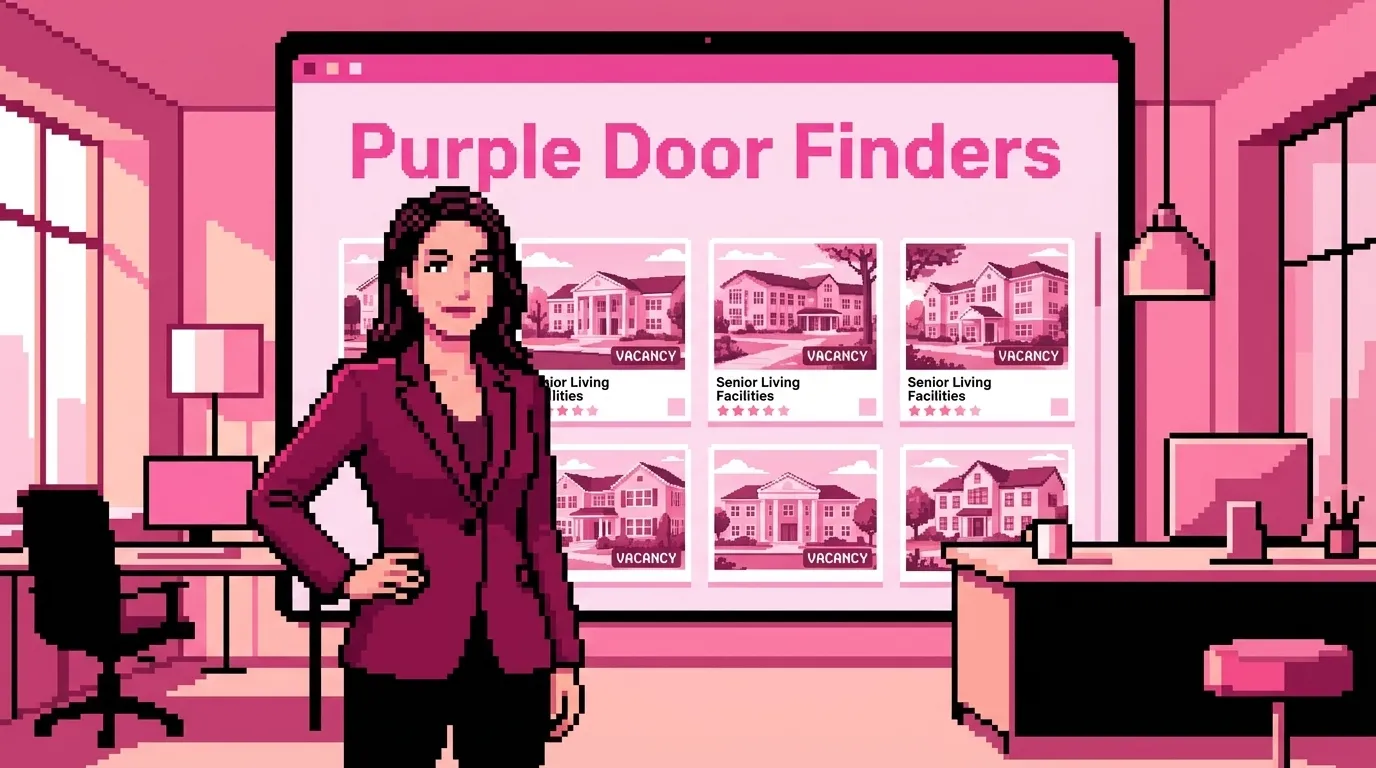
Christina Bremner wanted to build the “Zillow for seniors” — a platform where older adults and their families could find senior living communities and apartments across the U.S., with live vacancies from more than 60,000 communities.
Her competitors charged referral fees equal to a month of care. She wanted a subscription model that was fair to communities and sustainable for her business. There was no off-the-shelf product for that. And she didn’t want to be a tenant in someone else’s software; she wanted intellectual property she could own and grow.
She talked to ten different developers. Most offered some flavor of “we’ll customize something existing.” She needed a partner who would help her design the system she didn’t have words for yet.
When the timing finally worked (after a pandemic-induced pause), the pattern of our collaboration became clear:
- She brought problems, not specifications.
- We brought back working solutions, not a list of modules to buy.
The result wasn’t “a website.” It was a platform she could evolve into “the go-to for everything senior living” as the U.S. senior population triples over the coming decades.

Christina eventually did something that still humbles me: she named her company Purple Door Finders as a nod to PurpleOwl.
That’s not really about us. It’s about a pattern: if your idea doesn’t fit an existing box, we don’t try to shove it into one.
From 1980s Software to Browser-Age Manufacturing
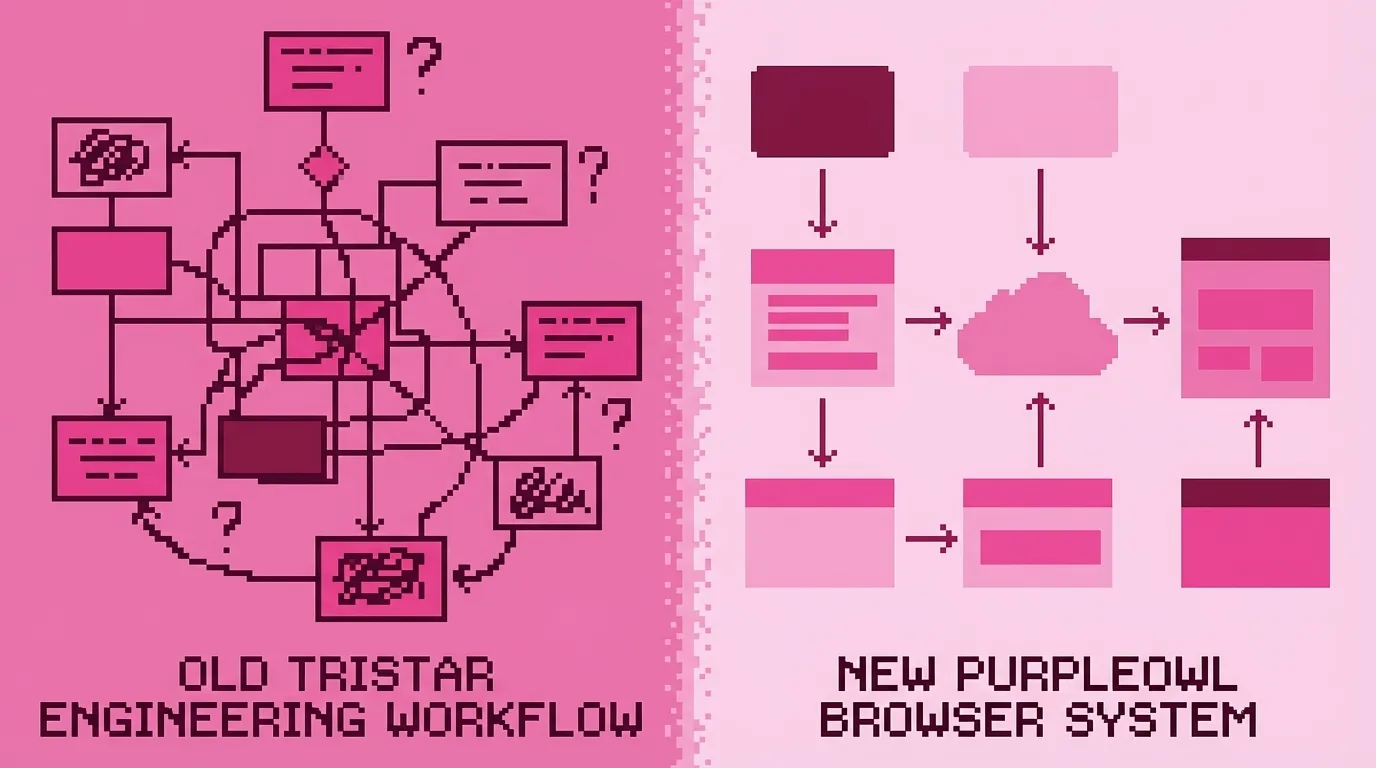
On the other end of the spectrum is a 50-year-old manufacturer: Tristar Engineering. Fifteen people, custom precision cutting tools for hydraulic and pneumatic parts. Their software was older than some of their employees.
They had:
- A custom program written in the 1980s that could no longer be upgraded.
- Only a couple of people left in the country who even knew how it worked.
- Training new staff that felt like teaching them a dead language.
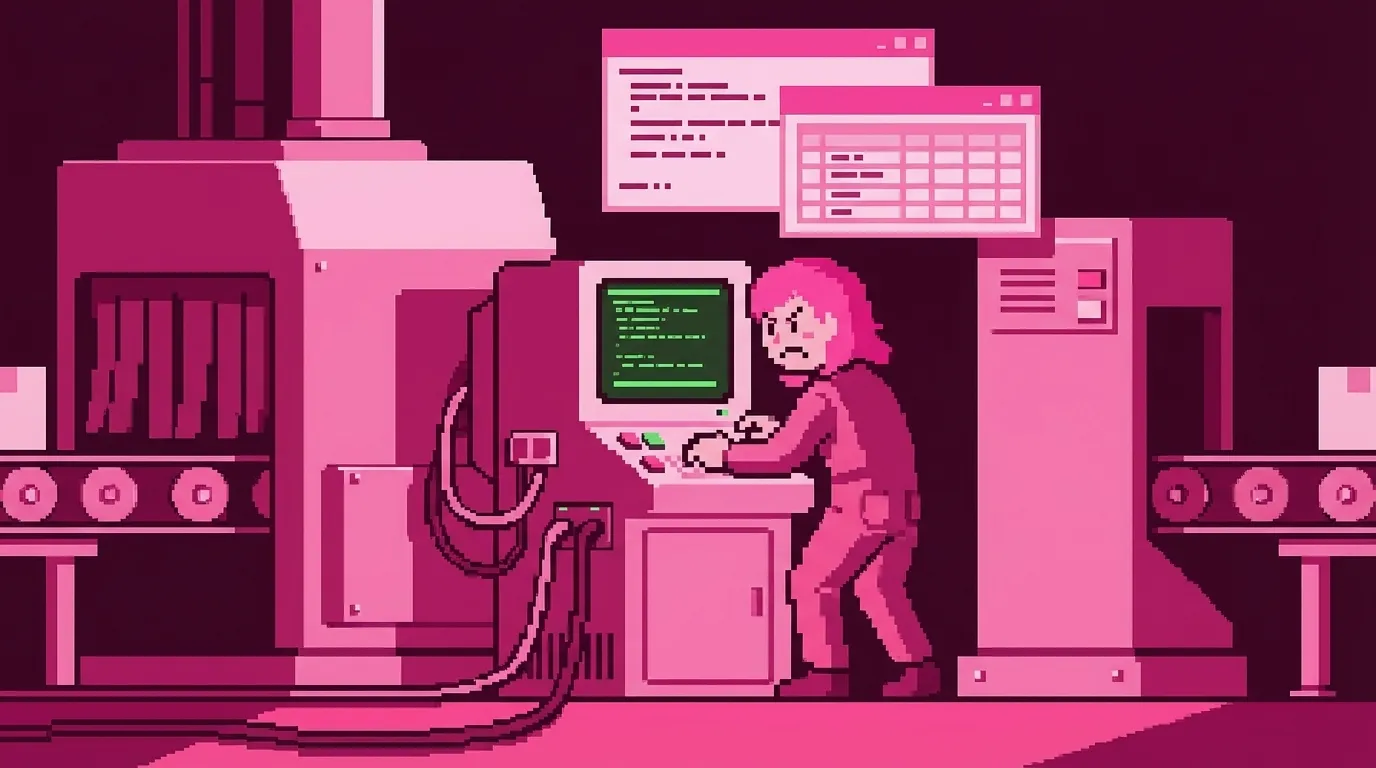
Lisa, one of their key people, spent over half her day coping with system problems and undocumented processes. Colleagues from every division lined up at her door because the system had turned her into a human router: accounting questions, engineering questions, data issues — all found their way to her desk.
Then the real alarm bell rang:
- Software support was ending in two years.
- Their IT provider failed to back up correctly.
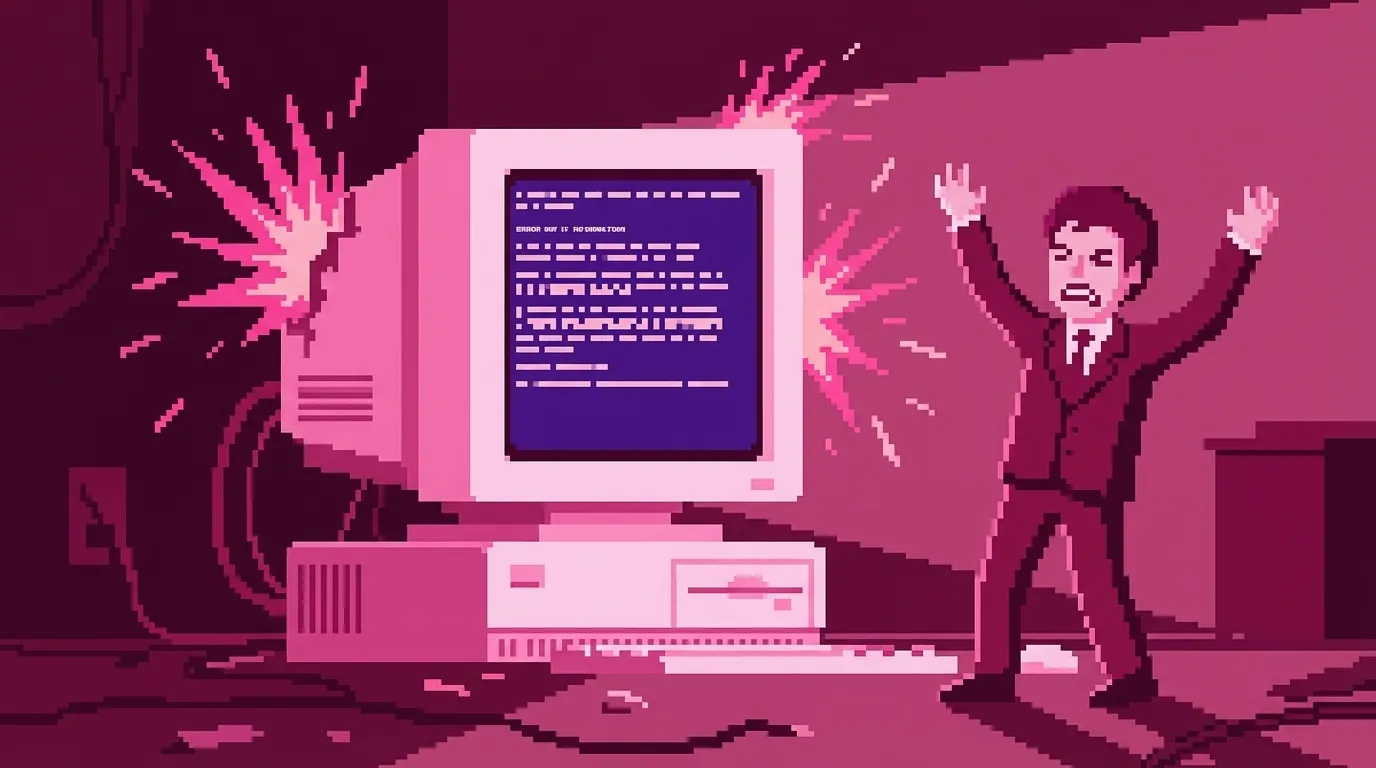
- A power surge fried hard drives and they lost a year and a half of data.
Meanwhile, the CEO, Robert, estimated he was spending about 25% of his time just dealing with software inefficiencies.
They weren’t just “due for an upgrade.” The business was running on a system that couldn’t be replaced and barely be understood.
What we didn’t do was “rebuild their 1980s system in the browser.”
Instead, we:
- Mapped how work actually happened across the company.
- Challenged processes that existed purely because “the old system made us do it that way.”
- Designed a new system around the way they wanted to work going forward.
The replacement was:
- Browser-based, which suddenly made remote work possible where it was previously “a virtual impossibility.”
- Intuitive enough that new people could be trained without learning 40 years of quirks.
- Real-time, so they didn’t have to wait for month-end to see if they were profitable.
Robert stopped spending a quarter of his day babysitting software. Lisa stopped being the emergency room for every data problem. And the company could finally think about hiring outside salespeople because they could safely expose data through a browser, not through a VPN into a museum.
When Salesforce Is the Problem, Not the Platform
On the opposite end of the tool spectrum was EagleOne — a 100+ person nurse case management company that serves national brands like Ace Hardware, Atlas Van Lines, and Cheesecake Factory.
They had done what everyone tells you to do: they bought Salesforce, hired programmers to customize it, and built their case management processes on top. For a while, it worked well enough.
Then the bill came due:
- Around $250,000 per year for Salesforce licenses.
- Another $40,000 per year in plugins and integration fees.
And underneath those numbers was a more painful one:
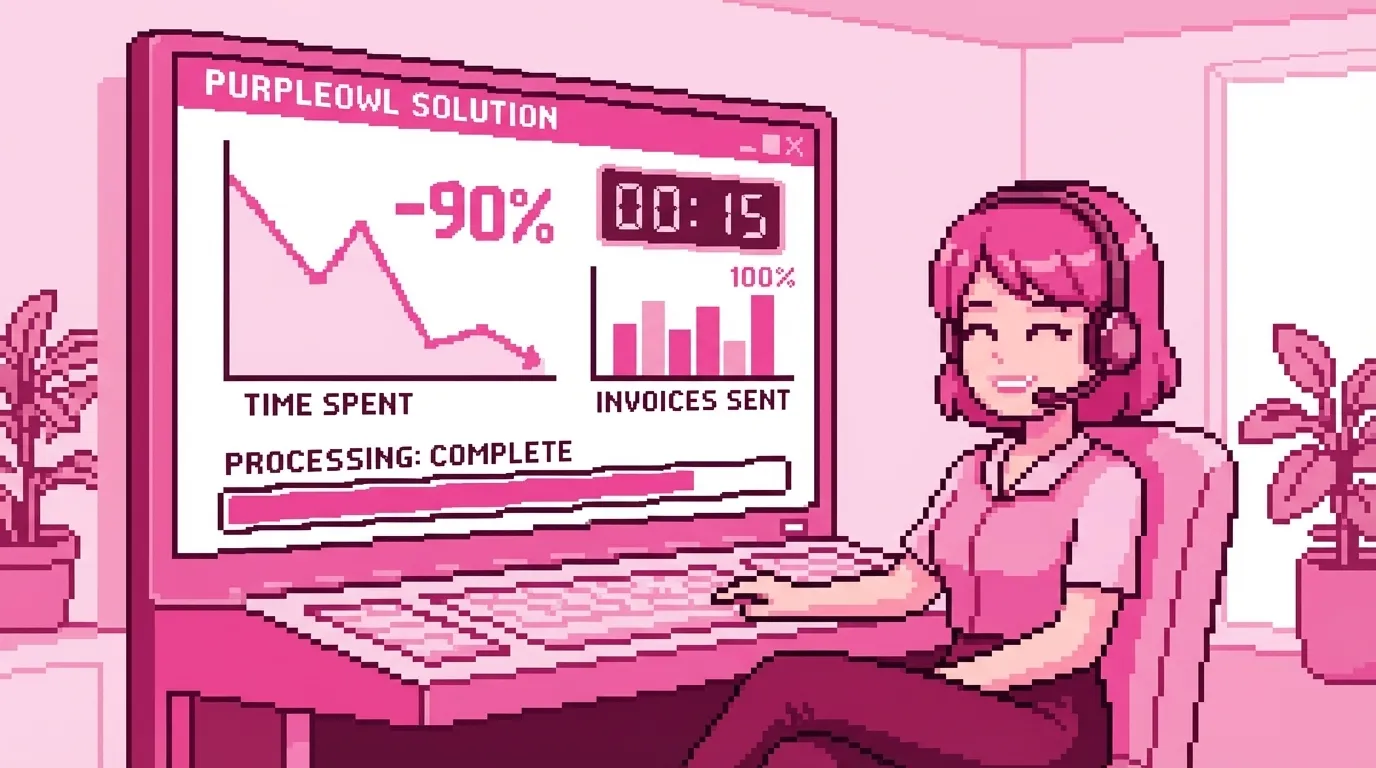
Invoicing took 120 hours a month — the entire finance department grinding for days at the start of each month just to get bills out the door.
Nothing else got done during billing week.
When she came to us, Ella (who ran HR, IT, and finance) wasn’t naïve about software. She had implemented off-the-shelf tools before. What she had never done was bet on custom software.
We didn’t pitch “a full replacement for Salesforce” as step one. We focused on the ugliest, most easily measured problem: invoicing.
Within three weeks of starting that project, they had:
- A custom invoicing engine that took 120 hours down to about 15 minutes.
- A system where updating customer info, managing billing rules, and building reports became everyday work, not a specialized ritual.
- The ability to handle 10–20% annual growth in customer base without adding headcount or burning out the finance team.
They kept what Salesforce was good at, but took back control of the part that Salesforce was punishing them for.
Ella later called us “one of the most dependable and responsive companies [she’d] ever dealt with in the realm of software,” and pointed to our EOS discipline — goal setting, milestones, cadence — as part of why the project landed cleanly.
Again, the pattern: we didn’t show up to sell a platform. We showed up to obliterate a 120-hour problem.
What All of These Stories Have in Common
Different industries. Different sizes. Different tech starting points.
But the through line is pretty simple:
- They were too unique for generic tools, and too small to throw millions at SAP or a seven-figure “digital transformation.”
- Their software had stopped being an asset and had become a tax.
- They needed someone who would start with their reality, not with a product catalog.

Across these projects, a few PurpleOwl principles show up over and over:
- Migration-first, not “rip and replace.” We take data and existing processes seriously. In Tristar’s case, that meant salvaging what could be salvaged from a 40-year system and making sense of it in a new structure instead of telling them to start over.

-
We refuse to simply clone your old system’s weirdness. Both Robert and Lisa talk about how much time we spent asking why they did things a certain way — was it genuinely the best process, or a work-around the old software forced on them?
-
We design for the day-to-day, not for the demo. Christina didn’t need shiny dashboards; she needed a platform seniors and communities could actually use, built on IP she could grow over decades. EagleOne didn’t need “AI insights”; they needed invoicing to stop eating a third of a department’s time.
-
We see software as part of your succession plan, not just your operations plan. Systems that only one employee understands are a liability. Systems that match your workflow and are intuitive to new hires are assets buyers will pay for.
How We Actually Work With Clients
Under the hood, our process is unglamorous on purpose:
-
We talk to almost everyone. Not just leadership. Not just IT. We interview people doing the work, often with live screen-share walkthroughs of a normal day. That’s where the real system lives.
-
We map tribal knowledge on purpose. We don’t treat undocumented workflows as accidents. We surface them, document them, and then decide explicitly which ones should survive in the new system.
-
We let the system become the manual. We aim for systems where, if you understand the business, the UI makes it obvious what you’re supposed to do next. Documentation still exists, but you don’t need a 300-page PDF to get through your first week.
-
We start where the pain is loudest and the ROI is clearest. For EagleOne, that was invoicing. For the healthcare document portal, it was secure one-time delivery. For others, it’s quoting, scheduling, or inventory. We pick the slice where success is undeniable.
Who We’re a Good Fit For
We’re not the right answer for everyone. We tend to be a good fit if:
- You’re between ~15 and ~150 people, maybe up to a couple hundred.
- You’ve outgrown spreadsheets and basic SaaS tools, but don’t want an enterprise albatross.
- Your workflows are a competitive advantage — how you work matters, not just what you sell.
- You’re willing to invest time in mapping your reality, not just signing a license and hoping it works.
If that sounds like you, our job is simple:
- Turn your weird, effective way of operating into software you own.
- Make that software boringly reliable.
- Free your best people from being human integrations, so they can use their brains on the work that actually moves the needle.
The case studies aren’t about how clever PurpleOwl is. They’re about what happens when you stop forcing a growing company to live inside someone else’s idea of “how software should work” — and start building systems that finally fit the company you’ve actually built.
Keywords
Related Articles
PurpleOwl 2025: The Year We Stopped Just Building Software
In 2025, PurpleOwl learned the power of building software *with* users, not just *for* them. Discove...
One System, One Truth: How a Right-Sized CRM Replaces Spreadsheet Chaos
Ditch spreadsheet chaos! Discover how a right-sized CRM can streamline your 20-80 person company, bo...
Your People Are the Integration Layer (And It's Costing You Everything)
Is your team acting as human middleware? Discover the 6 hidden patterns of integration failure costi...